

Overall Equipment Effectiveness (OEE): The Key to Unlocking Maximum Productivity
Imagine this: a key machine on the production line suddenly breaks down. The maintenance team scrambles, other processes are delayed, and production targets fall behind. Quality checks uncover defects, leading to costly rework and even more downtime.
Small inefficiencies like unplanned stops or defects can snowball into major production losses. This is where Overall Equipment Effectiveness (OEE) becomes essential.
What is Overall Equipment Effectiveness (OEE)?
Overall Equipment Effectiveness (OEE) is a powerful performance metric used in manufacturing to evaluate how efficiently a production line or equipment is operating. It measures productivity across three key dimensions:
- Availability – The percentage of scheduled time that equipment is actually available for production.
- Performance – The speed at which the machine operates as a percentage of its maximum capacity.
- Quality – The percentage of good parts produced compared to the total output.
The OEE formula is simple but effective:
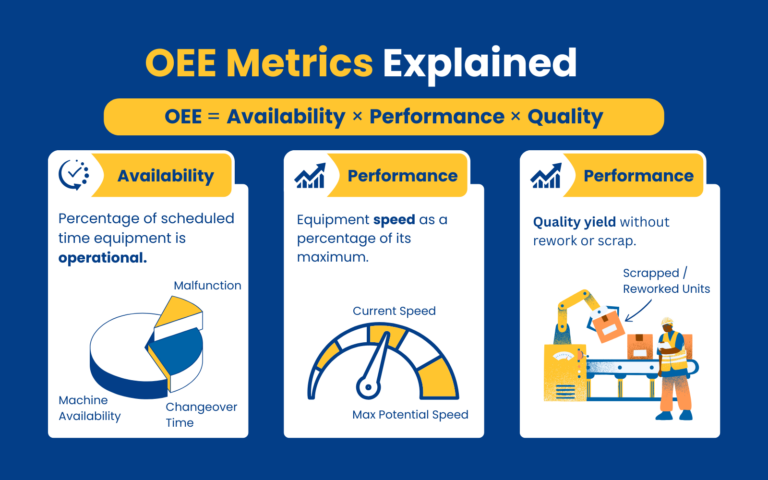
OEE = Availability × Performance × Quality
A perfect OEE score of 100% means your equipment is running with zero downtime, at maximum speed, and producing defect-free products.
OEE Benchmarks: What’s a Good Score?
100% OEE = Perfect production (no defects, max speed, zero downtime).
85% OEE = World-class performance and an ideal goal for most manufacturers.
60% OEE = Average, but signals significant room for improvement.
40% OEE = Common for beginners—easy gains can often be made by tracking downtime and fixing key issues.
Tracking your OEE score is the first step toward optimising production and improving manufacturing efficiency.
Why OEE Matters for Manufacturers
1. Identify Hidden Production Losses
OEE provides a clear snapshot of where inefficiencies lie—be it in unplanned downtime, slow cycle times, or product defects.
2. Drive Continuous Improvement
Tracking OEE over time enables manufacturers to set benchmarks, implement Kaizen strategies, and achieve lean manufacturing goals.
3. Improve Quality and Reliability
High OEE scores indicate fewer defective products, which leads to better customer satisfaction and lower returns.
4. Enhance Decision-Making
OEE data supports smarter, data-driven decisions—from maintenance schedules to process redesigns.
The Benefits of Using OEE in Your Facility
✅ Cost Savings – Minimise energy consumption, reduce material waste, and optimise labour usage.
✅ Competitive Advantage – Deliver high-quality products faster than your competitors.
✅ Sustainability – Cut down on inefficiencies and contribute to greener production methods.
✅ Higher Profit Margins – Get more output from existing assets without extra investment.
Final Thoughts
Overall Equipment Effectiveness (OEE) is more than just a number—it’s a roadmap to operational excellence. For manufacturers aiming to optimise production, reduce waste, and stay competitive, investing in OEE is a smart, strategic move.
By regularly tracking and improving OEE, you’re not just boosting productivity—you’re building a more resilient and future-ready manufacturing business.
Ready to Optimise Your OEE?
LKH Precicon provides advanced OEE solutions to help you monitor, analyse, and improve your equipment performance in real time. Whether you’re looking to reduce downtime, boost output, or enhance quality, we have the tools and expertise to support your goals.
👉 If you want to learn more about OEE, contact LKH Precicon.
Or chat with us today and start your journey towards smarter, more efficient manufacturing.