

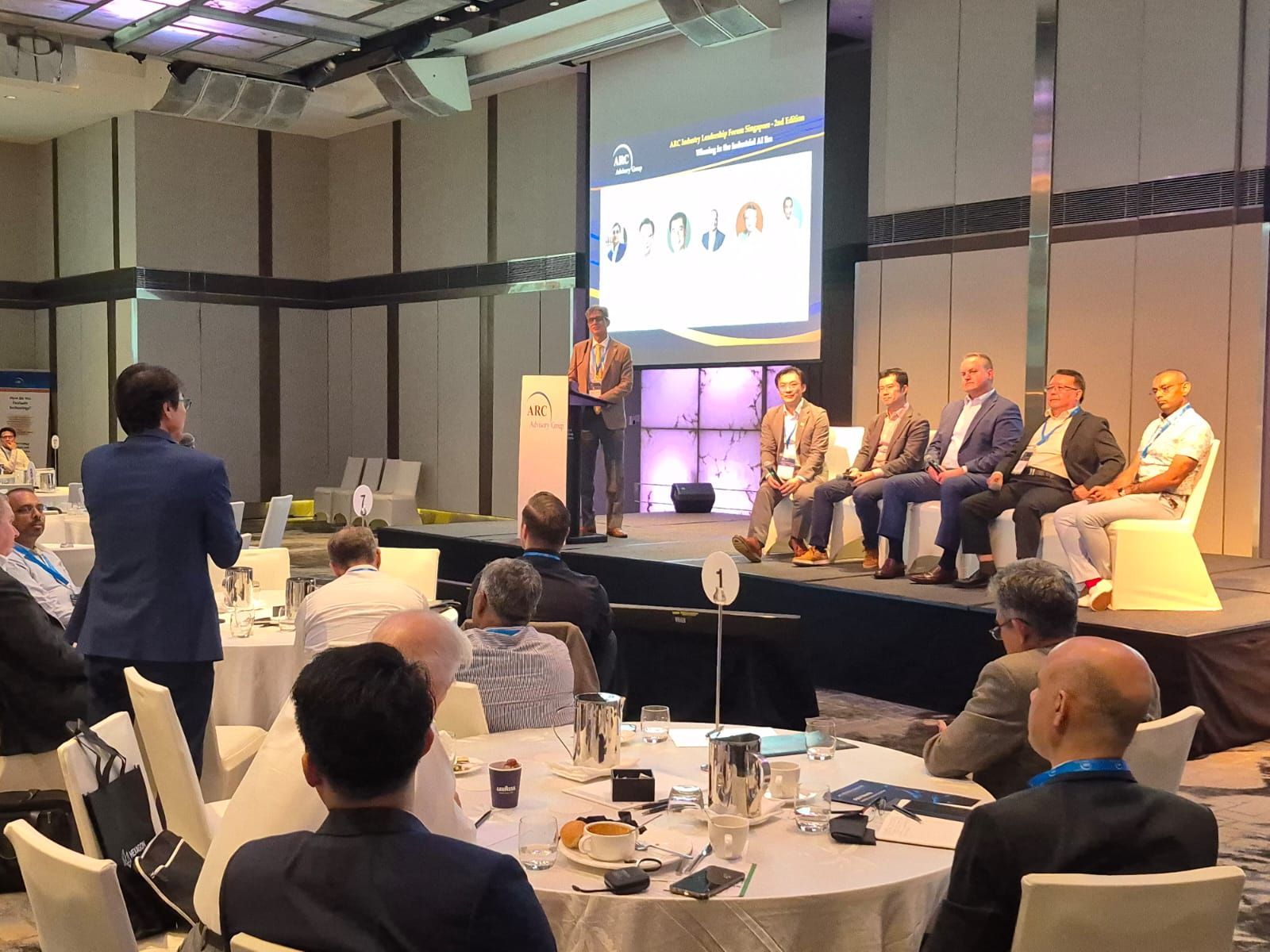
LKH Precicon’s Business Development Senior Manager, Colin Koh, was recently invited to speak at the ARC Industrial Automation Panel, joining industry experts to discuss two critical topics shaping the future of manufacturing: the evolution of cybersecurity in the age of Artificial Intelligence (AI) and how Singaporean SMEs can successfully adopt AI in manufacturing.
As a leader in industrial solutions, Precicon is deeply committed to enabling manufacturers to embrace Industry 4.0 securely, efficiently, and sustainably. This panel provided an ideal platform to share our perspective on navigating the opportunities and challenges of AI-powered manufacturing.
Speaker Profile: Colin Koh and Precicon’s Role in Industry 4.0
With extensive experience in industrial automation and business development, Colin Koh plays a pivotal role in helping manufacturers integrate advanced technologies into their operations.
As a trusted Singapore-based industrial solutions provider, Precicon specialises in electrical components, automation systems, and smart manufacturing solutions. We partner with businesses to bridge the gap between operational technology (OT) and digital transformation, ensuring technology adoption is secure, future-ready, and value-driven.
Cybersecurity Evolution in the Age of AI
Colin opened his presentation by highlighting a fundamental shift: traditional manufacturing IT and OT systems that once operated in isolation are now increasingly interconnected.
Industry 4.0 driven by the Industrial Internet of Things (IIoT) has expanded the cyber-attack surface significantly, creating new challenges for manufacturers.
4 Key Industry Shifts
1. From Isolation to Integration
The traditional “air gap” is disappearing as industrial control systems connect to the internet for efficiency.
2. Sophisticated Threats
Cyberattacks now target not just financial data but also intellectual property, including blueprints, designs, and operational parameters.
3. AI as a Double-Edged Sword
While AI can introduce vulnerabilities, it also enables real-time detection, high-speed monitoring, and rapid response.
4. Core Infrastructure Security
Ensuring secure broadband, data centers, and cloud environments is essential.
5. Edge Security
With AI/ML deployed closer to machines, defence-in-depth strategies are critical for safeguarding on-site systems.
Precicon’s Recommendations for Manufacturers
- Adopt multi-layered cybersecurity: network segmentation, strict access control, continuous anomaly monitoring, and secure patch management.
- Deploy AI-powered security solutions to act as “tireless sentinels” for intrusion detection and incident response.
- Invest in workforce education to reduce human error.
- Prepare incident response plans for quick containment and recovery.
- Ensure compliance with international standards such as IEC 62443 and frameworks like the EU AI Act.
AI for Singaporean SMEs in Manufacturing
Singapore’s leadership in automation, supported by its Smart Nation vision, provides fertile ground for AI adoption. Colin explained how SMEs can leverage AI to increase productivity, improve quality, and enhance operational agility.
6 Key Applications
1. Predictive Maintenance
Predictive maintenance leverages AI to continuously monitor sensor data from machinery and equipment, identifying early signs of wear or performance degradation. By analyzing trends and anomalies in real time, AI systems can forecast potential failures before they occur, allowing maintenance teams to take proactive action. This approach minimizes unplanned downtime, extends equipment lifespan, reduces maintenance costs, and ensures smoother, more reliable production operations.
2. AI-Driven Quality Control
AI-powered computer vision systems bring unprecedented accuracy and speed to quality control in manufacturing. By analyzing high-resolution images or video feeds from production lines, these systems can detect even the smallest defects that might be missed by human inspection. Early detection allows for immediate corrective action, reducing waste, minimizing costly rework, and ensuring that only products meeting the highest quality standards reach customers.
3. Process Optimisation
AI excels at identifying inefficiencies and bottlenecks within manufacturing workflows by analyzing large volumes of operational data. Through advanced algorithms, it can recommend adjustments to equipment settings, production sequences, or resource allocation to improve overall throughput. This results in faster production cycles, reduced operational costs, and improved product consistency, ultimately enabling manufacturers to respond more quickly to market demands.
4. Mass Customisation & Digital Twins
Mass customization powered by AI and supported by digital twin technology, allows manufacturers to produce customized products at the same speed and cost as mass production. A digital twin a virtual replica of a physical asset or process enables manufacturers to test design changes, simulate production scenarios, and optimize workflows in a risk-free environment. This reduces development costs, accelerates time to market, and supports agile responses to changing customer preferences.
5. Supply Chain Optimisation
AI-driven supply chain optimization uses advanced analytics to forecast demand more accurately, plan production schedules efficiently, and streamline logistics. By integrating data from suppliers, manufacturers, and distributors, AI can identify the most efficient routes, minimise inventory holding costs, and anticipate potential disruptions. This improves supply chain resilience, reduces waste, and ensures that products are delivered on time and at optimal cost.
6. Human-Robot Collaboration (Cobots)
Collaborative robots, or cobots, are designed to work safely alongside human operators, taking on repetitive, physically demanding, or hazardous tasks. Powered by AI, cobots can adapt to different workflows, learn new tasks quickly, and assist workers with precision operations. This partnership enhances workplace safety, boosts productivity, and allows human employees to focus on more complex, value-added activities that require creativity, problem-solving, and decision-making.
Government initiatives such as the Smart Industry Readiness Index (SIRI), SkillsFuture Training Programme, and partnerships like the Advanced Remanufacturing Technology Centre (ARTC) further strengthen the adoption landscape.
Challenges and the Path Forward
Despite the opportunities, SMEs face hurdles:
- Low adoption rates due to lack of awareness.
- High initial investment and unclear ROI.
- Skills shortages and reluctance to retrain.
- Fragmented data systems and poor integration.
- Cybersecurity concerns tied to IIoT adoption.
- Absence of a clear strategic roadmap.
- Organizational conservatism and siloed data ownership.
Overcoming these challenges requires industry collaboration, focused skills development, and a cultural shift from “my data” to “our data”.
Precicon’s Commitment to a Secure and Innovative Future
At Precicon, we believe that AI and cybersecurity must go hand in hand in modern manufacturing. We are dedicated to partnering with SMEs and enterprises to deliver innovative solutions that protect critical assets, improve productivity, and ensure regulatory compliance. By bridging technology and trust, we help businesses navigate Industry 4.0 with confidence.