


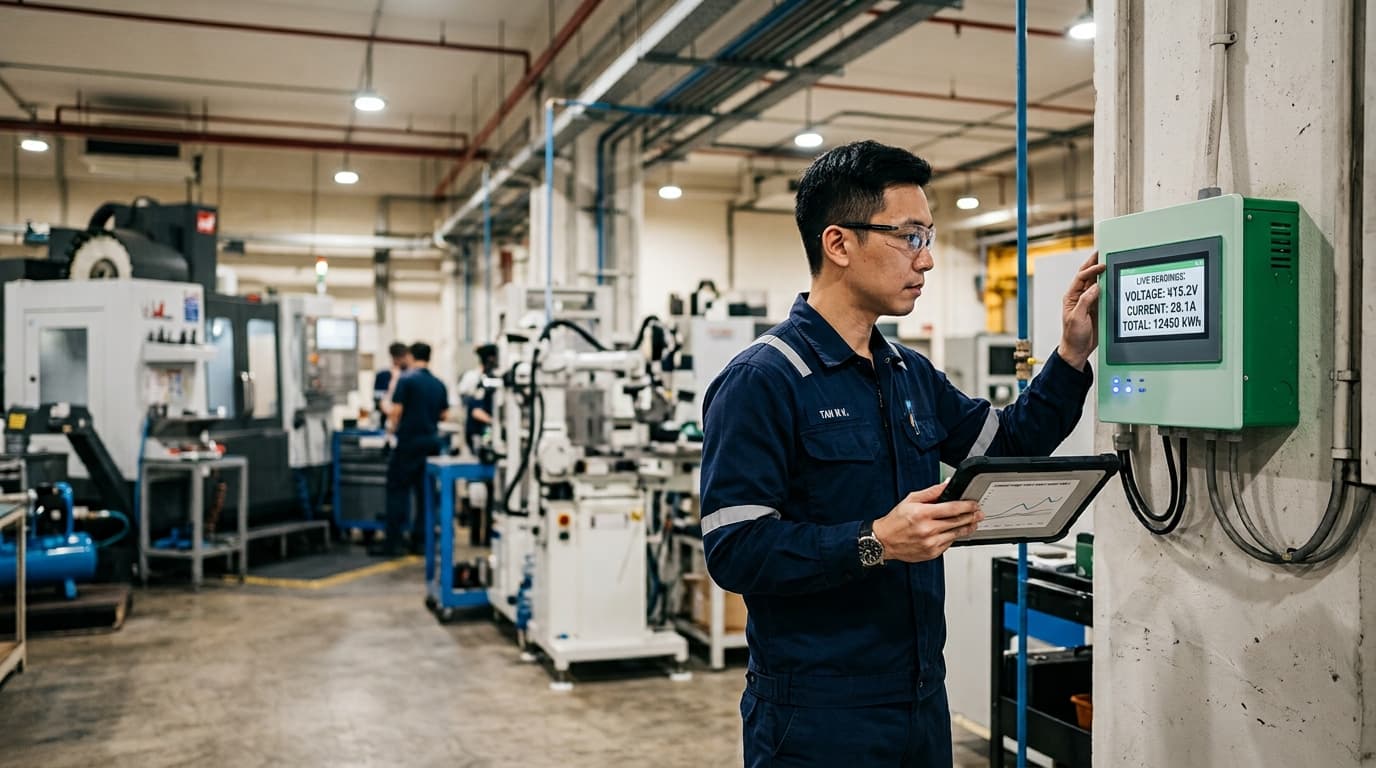
Industrial energy management is the practice of monitoring, auditing and controlling energy use across manufacturing equipment and processes to cut operating costs. Unlike building energy management, it targets production line loads: compressed air, motors and process heat. For precision manufacturers, real savings start with a structured energy audit.
- Industrial energy management targets production line loads (compressed air, motors, process heat), not building comfort systems like HVAC and lighting.
- Compressed air leaks typically waste 20 to 30 percent of a compressor's output, and most facilities never check.
- A proper energy audit sets a production normalised baseline first, then ranks fixes by payback period, not just by potential savings.
- ISO 50001 aligned energy management systems have delivered average savings of around 12 percent within 15 months, according to the U.S. Department of Energy.
- Precision manufacturing (CNC lines, cleanrooms, fabrication) needs a different playbook to generic factory advice, because the loads behave differently.
What industrial energy management actually covers
Industrial energy management is the ongoing process of measuring how much energy a factory's equipment and processes consume, then acting on that data to remove waste. It sits apart from general building energy management, which deals with lighting, air conditioning and occupancy in an office or retail space. A factory's biggest loads sit elsewhere: motors, compressors, process heat, and the machines actually making the product.
That distinction matters more than it sounds. A building energy manager optimises comfort systems running on a fairly predictable daily schedule. An industrial energy manager is chasing loads that shift with production volume, shift patterns and equipment condition. A compressor nursing a worn seal draws more power today than it did last month, and nothing on a building management dashboard would ever catch that.
| Aspect | Industrial energy management | Building energy management |
|---|---|---|
| Primary loads | Motors, compressors, process heat, production machinery | HVAC, lighting, occupancy systems |
| Who manages it | Plant engineers, maintenance teams, energy managers | Facilities managers |
| Data pattern | Tied to production schedule and equipment condition | Tied to occupancy and weather |
| Typical outcome | Lower cost per unit produced | Lower cost per square metre |
One benchmark worth knowing before you go further: Energy Use Intensity (eUI) is a facility's energy consumption per unit of floor area or output, typically expressed in kWh per square metre per year. There's no single "good" eUI score. It depends heavily on the manufacturing process, and a facility tracking eUI over time, rather than treating it as a one off audit figure, is usually the one that catches problems early. Precicon's broader look at how energy management has developed as a discipline for industrial sites covers how this measurement approach has shifted from annual spot checks to continuous tracking.
Why energy costs are climbing on the factory floor
The industrial sector accounted for 37% of global energy consumption in 2022, according to the International Energy Agency, and that share keeps growing as production scales globally. For manufacturers, that translates into a real problem: energy is no longer a fixed line item you budget for once a year and forget. Tariffs move. Demand charges bite when several machines start up at once. A single poorly timed production run can push a facility into a higher pricing bracket for the rest of the billing period.
Singapore manufacturers feel this in a specific way. Electricity here is priced through the wholesale market, which means costs fluctuate with fuel prices and regional demand rather than sitting on a fixed tariff. A factory that doesn't know its own consumption pattern in real time is effectively negotiating blind against a price that moves daily.
Where the waste actually hides: compressed air, motors and power quality
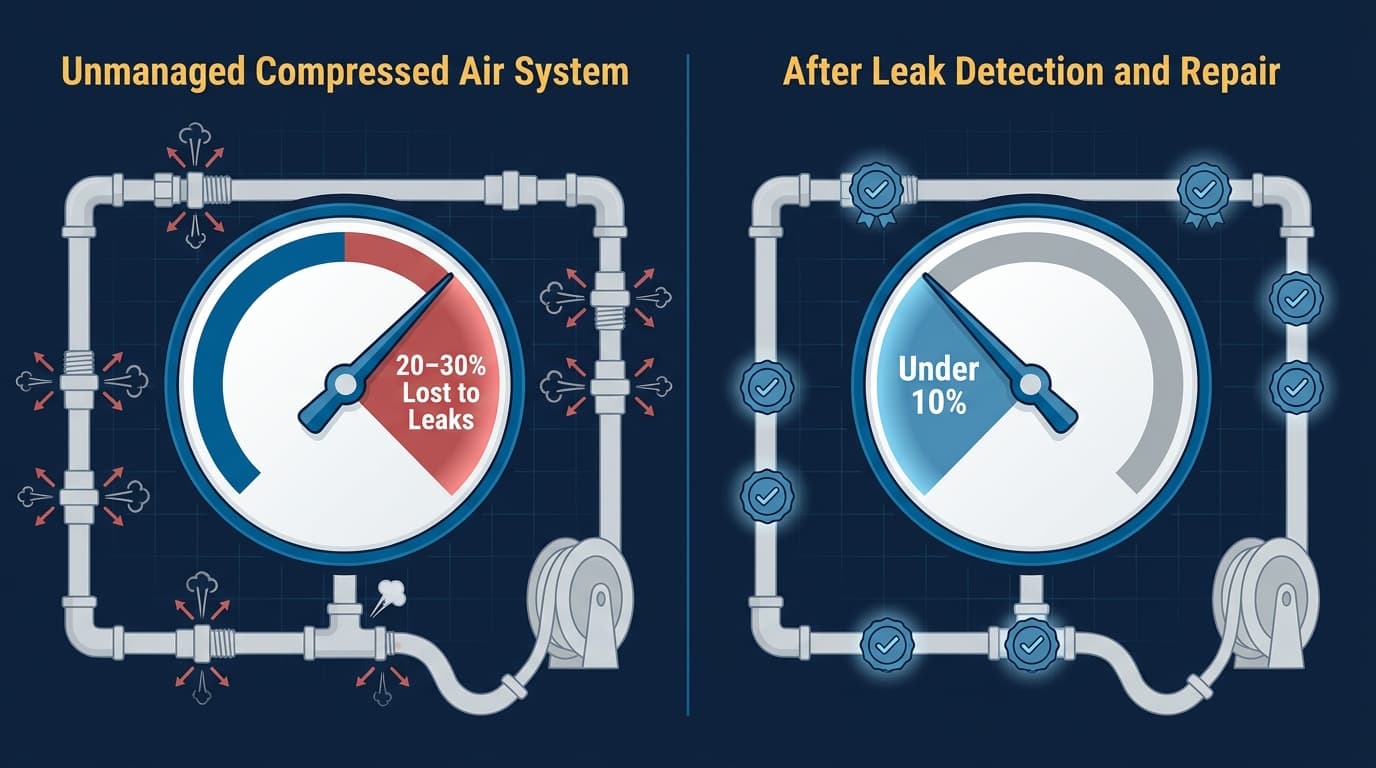
Ask most plant managers where their energy goes and they'll point at the big machines. The real waste usually hides in the systems nobody's watching. According to the U.S. Department of Energy's compressed air guidance (2014), a typical, poorly maintained plant loses 20 to 30 percent of its compressor output to leaks through fittings, joints and hose connections, and proactive leak detection can bring that down to under 10 percent without buying a single new machine.
Motors are the other quiet offender. An oversized motor running well below its rated load wastes energy every hour it operates, and most facilities never check whether their motors are sized correctly for the job in the first place.
Then there's power quality: voltage sags, dips and interruptions that don't just waste energy but actively damage equipment and shorten its working life. Precicon's work on power quality improvement breaks down how these disturbances propagate through a factory's electrical system, and the cost saving results from correcting voltage sag with Dynamic Sag Correctors show what fixing the problem is actually worth in avoided downtime and equipment replacement.
If any of this sounds familiar (recurring nuisance trips, equipment failing earlier than its rated lifespan should allow, energy bills that don't track with output), it's worth having a proper look at where your power quality actually stands before assuming the fix is bigger machinery.
How an industrial energy audit actually works
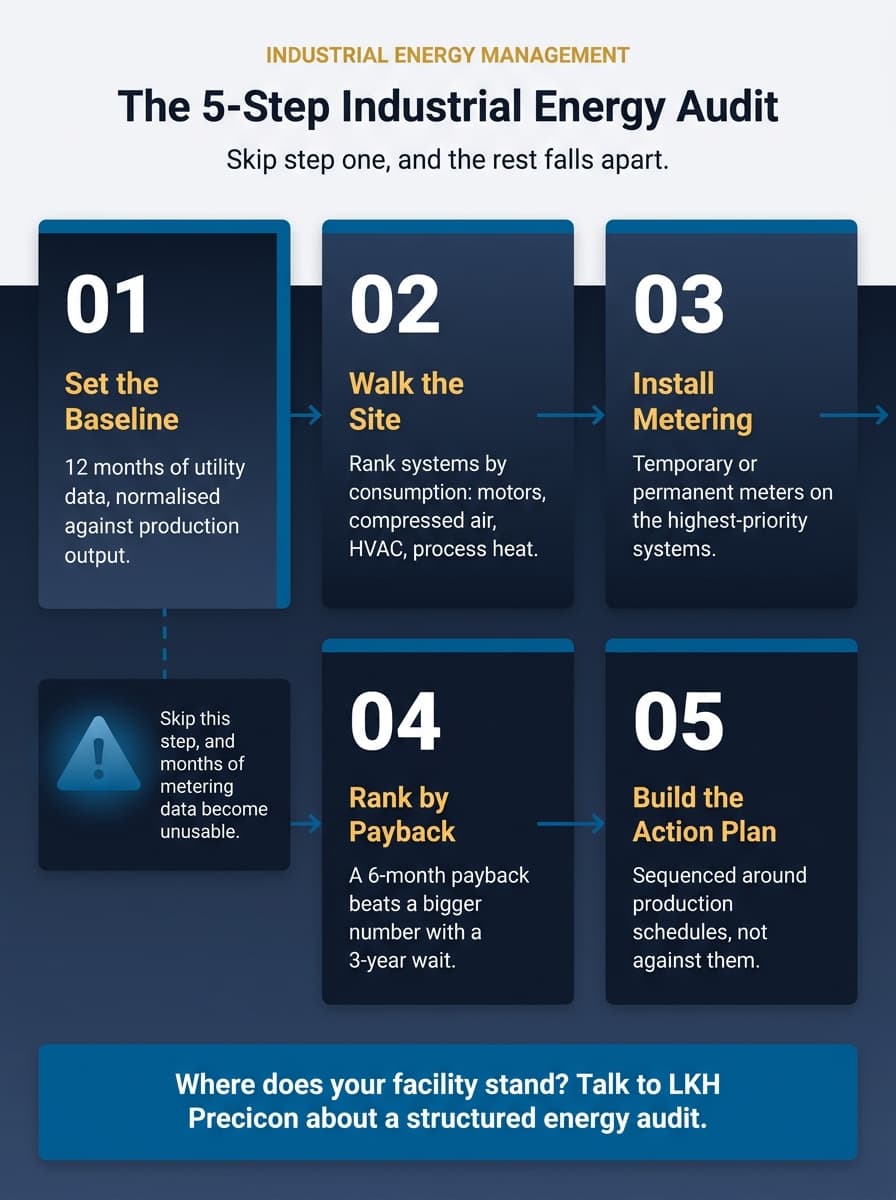
None of this means much without a baseline. An industrial energy audit is how you get one, and it follows a fairly consistent sequence regardless of who runs it:
Set a baseline period, typically 12 months of utility data normalised against production output, so savings can later be measured against something real rather than a guess.
Walk the site with plant engineers to identify the highest consumption systems: usually motors, compressed air, HVAC and process heating, in roughly that order.
Install temporary or permanent metering on the systems flagged as highest priority, down to individual equipment where it's cost justified.
Compile findings into a report that ranks opportunities by payback period, not just by potential savings. A fix with a six month payback beats one with better numbers on paper but a three year wait.
Build a prioritised action plan the plant can actually execute, sequenced around production schedules rather than against them.
Skip the first step and the rest falls apart. We've seen audits where metering went in before the baseline period was properly defined, and three months of otherwise useful data had to be thrown out and recollected because there was nothing to normalise it against. It's a basic mistake, and an easy one to make when a team is keen to start fixing things immediately.
This is close to what Precicon's SIRI Assessment does at a broader level. It's a structured readiness check that tells you not just where your energy is going, but where your whole facility sits on the path to Industry 4.0. For SMEs working through this for the first time, our five step sustainability roadmap for Singapore industrial SMEs lays out a practical sequence to follow once the audit findings are in hand. If you're weighing up where your own facility stands, our team can talk you through what a structured audit would look like for your operation.
Talk to an Engineer
Looking for the biggest energy savings on your production floor?
Energy management systems: turning data into savings
An audit tells you where you stand once. An energy management system (EMS) tells you where you stand continuously, and that's the difference between fixing a problem and staying ahead of the next one.
A useful EMS doesn't just display a number. It tracks a handful of specific metrics against each other: energy spend versus budget, carbon intensity, and production normalised energy intensity. Most facilities skip that last one, even though it's arguably the most useful: energy consumed per unit produced, rather than per hour. That metric matters because raw consumption naturally rises when output rises. Without normalising against production, a plant running flat out looks like it's "wasting more energy" than one sitting idle, which is backwards.
According to the U.S. Department of Energy's Better Plants Program (2017), facilities that adopt a structured energy management system built around the ISO 50001 standard cut energy use by an average of 12 percent within 15 months. That's not a one off equipment swap. It's the compounding effect of a team that can actually see waste as it happens rather than discovering it three months later on a utility bill.
Precicon's energy management system is built around exactly this kind of continuous visibility, with real time power monitoring providing the underlying data layer that makes normalised metrics like these possible in the first place.
Why precision manufacturing needs a different playbook
Generic manufacturing advice tends to fall apart the moment you apply it to precision manufacturing. A CNC machining line, a semiconductor cleanroom or a fabrication facility running tight tolerances doesn't behave like a generic assembly plant. Process heat, cleanroom conditioning and high precision motion control all draw power in patterns that a standard compressed air and lighting audit simply won't catch.
This is also where energy efficiency stops being a standalone metric and starts connecting to Overall Equipment Effectiveness (OEE). A machine running inefficiently on the energy side is very often also running inefficiently on the production side, and our breakdown of OEE is worth reading alongside any energy audit, because the two numbers usually move together.
LKH Precicon has worked inside Singapore's precision and industrial manufacturing sector for over 40 years, since 1985, long enough to have seen most of the ways a generic energy approach fails to fit a precision environment. Our success stories from Singapore manufacturers already working through this and a case study on predictive maintenance supporting sustainable manufacturing both show what this looks like applied to a real facility rather than in the abstract.
ISO 50001 and sustainability grants: compliance that pays for itself
ISO 50001 is the international standard for energy management systems, setting out how an organisation should measure, manage and continually improve its energy performance. For manufacturers, certification isn't just a compliance checkbox. It's the same discipline that produces the savings described above, formalised into something auditable.
Singapore manufacturers pursuing this path aren't doing it entirely at their own expense, either. Government sustainability grants exist specifically to offset the cost of energy audits, metering and system upgrades, which changes the ROI calculation considerably for SMEs weighing up whether now is the right time to start.
Where to go from here
Industrial energy management isn't a single project with a finish line. It's a discipline: audit, measure, act, measure again. The manufacturers getting the most out of it are the ones treating energy data the same way they treat production data, something to check daily, not annually.
Whether you're still mapping where the energy is going or ready to put a system in place, reach out to our team with your questions on industrial energy management, and see where our energy management software for facility managers would fit into what you're already running.
Frequently Asked Questions
There isn't a single universal benchmark. A semiconductor cleanroom and a metal fabrication shop will have very different "good" scores because their processes draw power differently. What matters more is tracking your own eUI over time against your own baseline, so you can catch drift before it shows up as a much bigger bill.
An energy management system (EMS) focuses on industrial and production loads: motors, compressors, process heat. A building management system (BMS) focuses instead on comfort systems like HVAC, lighting and occupancy in commercial spaces. A factory typically needs both, but the EMS is where the larger, more variable savings usually sit.
ISO 50001 is an international standard that sets out a structured process for managing energy use and driving continual improvement. It isn't legally mandatory for most manufacturers, but facilities that adopt it tend to see measurable, sustained savings rather than a one off dip after a single efficiency project.
An audit establishes a production normalised baseline, identifies the highest consumption systems on site, installs metering where it's justified, and produces a prioritised action plan ranked by payback period rather than by savings potential alone. The whole process typically takes weeks, not days, because the baseline period needs to be long enough to be meaningful.
Findings vary by sector and starting point, but structured ISO 50001 aligned programmes have delivered average savings of around 12 percent within 15 months, based on U.S. Department of Energy data. The bigger driver isn't the software itself. It's having continuous visibility instead of discovering waste after the fact.
Start with a clear picture of your factory's energy use
Tell us about your facility and LKH Precicon's engineering team will get back to you.
Contact Us